TEL: +86-573-87471884 / 87471697
FAX: +86-573-87471537
Address: No. 205 Xinjiang Road Changan Haining, Zhejiang, China
E-mail: howardshen@263.net, goldcitylock@hotmail.com
Welcome to our website!

 Language

The smart padlock vs traditional padlock comparison is no longer just about keys versus apps. For B2B buyers, the more important questions are operational: How will users receive access? What happens during a battery or network problem? Who manages credentials? How much maintenance does the system need? And can the same specification be reproduced across hundreds of locks?
Smart padlocks can add digital credentials, fingerprint or Bluetooth access, user administration and, on some systems, event records. Traditional mechanical padlocks avoid batteries and software but still need disciplined key or combination control. The right choice depends on the application, user workflow, security requirements and total cost of ownership.
The unlocking method is only the visible part of the comparison. A B2B procurement team also needs to review power, connectivity, administrator access, maintenance and failure recovery. This is where a smart padlock and a mechanical padlock begin to create very different operating models, even when both fit the same physical hasp.
Procurement factor | Smart padlock | Mechanical padlock |
Typical access | Fingerprint, Bluetooth, app, NFC, PIN or other digital credential | Key or mechanical combination |
Power | Battery required on most designs | No battery |
Connectivity | Product-dependent | None |
Digital user administration | Available on supported products | Not applicable |
Event records | Available on some systems | Typically unavailable |
Software support | Relevant for connected models | Not required |
Typical management issue | Battery, credentials, account or platform support | Keys, combinations and access records |
A multi-site operator with frequent contractor changes may value fast digital credential updates. A stable offline access point may not need those functions. Neither scenario should be forced into the same technology decision.
No. A keyless padlock is not automatically a smart padlock.
A mechanical combination lock can remove the physical key without adding Bluetooth, firmware, an app or a battery. GOLD CITY's Brass Combination Padlock range, NO.PLC203-404, includes 20 mm, 30 mm and 40 mm models with three- or four-wheel configurations depending on the size.
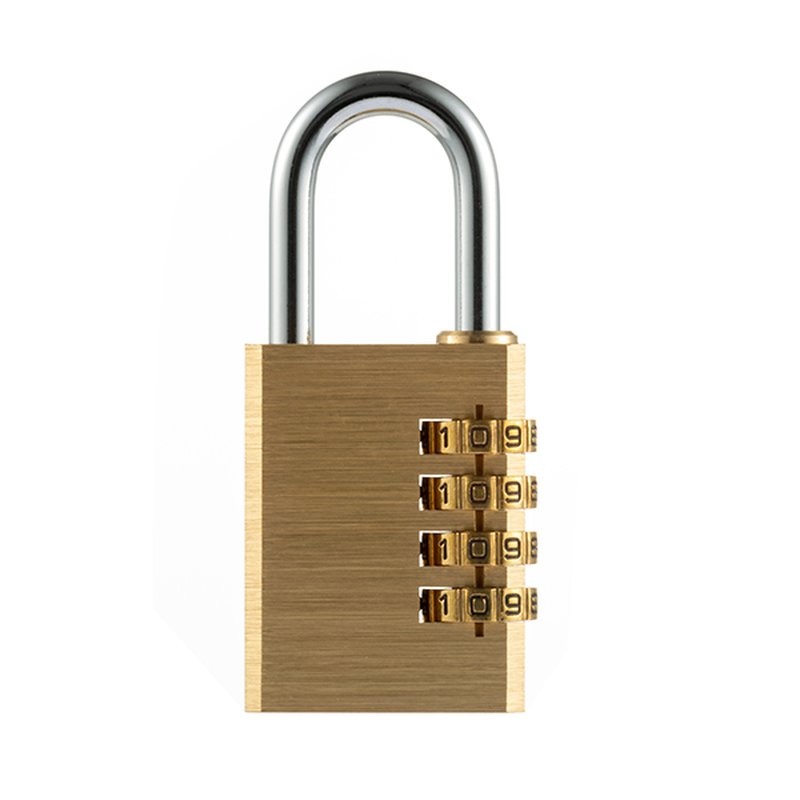
For distributors, this distinction is worth making clear in product descriptions. Buyers searching for a “keyless padlock” may be looking for either a mechanical combination product or a connected smart device.
Connected locks add a digital lifecycle to a physical security product. Depending on the design, that may involve firmware, a mobile application, wireless communication, cloud services, user accounts and ongoing security updates. For procurement teams, these are product-support questions as much as IT questions.
The issue has become more visible in Europe during 2026 as the EU Cyber Resilience Act moves into implementation.
From September 11, 2026, manufacturers of products with digital elements made available in the EU must meet CRA reporting obligations for actively exploited vulnerabilities and severe security incidents. The Act's main obligations apply from December 11, 2027. Where a connected padlock falls within the CRA's scope, cybersecurity support and vulnerability handling therefore belong in supplier due diligence.
For any connected padlock, ask practical questions before deployment:
· Can authorized users open it offline?
· What happens when the battery is low or fully discharged?
· Is a backup access method available?
· Who owns and administers the account?
· How are former employees or contractors removed?
· How long are firmware and security updates supported?
This is especially relevant for importers and distributors placing connected products on the EU market. A product that works well on day one still needs a workable support path several years later.
Those digital failure modes also change the real cost of ownership when locks are deployed across multiple locations.
Unit price can hide a lot. Smart padlock deployment may involve battery replacement, user enrollment, gateway or subscription costs on some systems, firmware management and electronic replacement procedures. Mechanical padlocks avoid those digital tasks, while key duplication, lost keys, rekeying, combination administration and spare stock create their own costs.
The useful comparison is therefore lifecycle cost, not the first quotation alone.
Ordinary failures are the ones most likely to disrupt a site. Batteries run down. Phones are replaced. Staff leave. Keys disappear. Somebody forgets a combination.
With a smart padlock, define the low-battery warning, emergency access method, administrator recovery and offline behavior before approving a fleet. With a mechanical system, define spare-key custody, duplicate-key authorization and the response to a lost key.
A recovery procedure may look like a small detail in an RFQ. It feels much less small when a service crew is standing outside a locked gate.
For large buyers, the number of users can matter as much as the number of locks. Smart access can be attractive where permissions change frequently or audit records are required. Mechanical key systems remain practical where user groups are stable and an offline access structure is preferred.
This decision should follow the workflow rather than the technology trend.
Digital credentials can make it easier to add or remove users without recovering physical keys. That benefit comes with the need to manage the supporting platform.
Keyed-alike mechanical locks can allow one authorized user to operate several defined access points. A master-key structure can add another access level for supervisors. GOLD CITY's Master Key Steel Ball Locking Brass Padlock range offers multiple body sizes within a mechanical master-key product family.
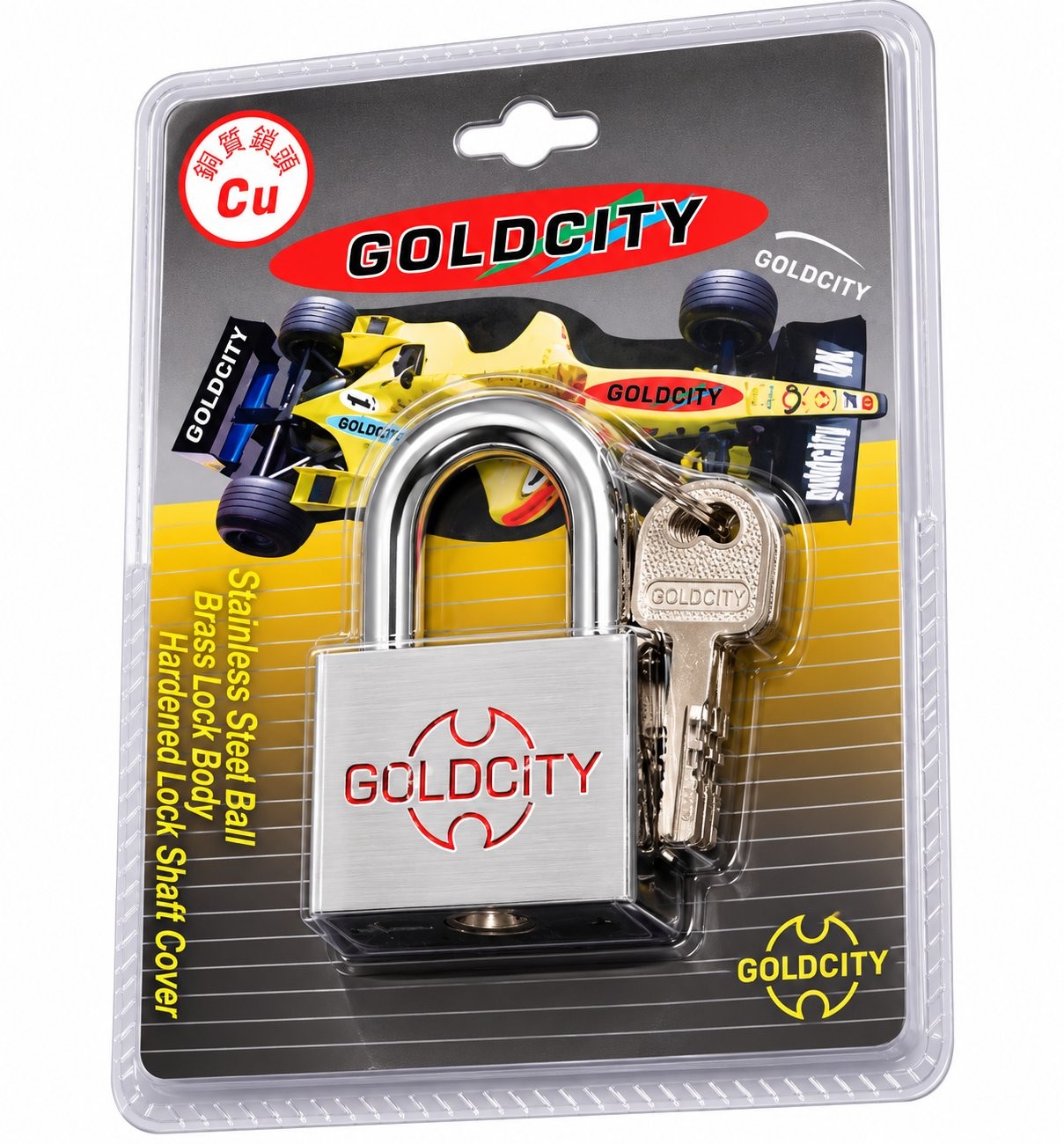
For a bulk order, document the hierarchy clearly. “One key for everything” and “master key system” are not interchangeable purchasing instructions.
Smart versus traditional is only one part of the buying decision. Every lock still needs to fit the receiving hardware and remain practical in daily use. The buyer also needs a specification that survives production, shipping and repeat orders without relying on somebody's memory.
That is particularly important for importers, hardware distributors and industrial supply companies managing several sizes or customer programs.
Start every order with the physical interface: body dimensions, shackle diameter, usable opening, environment and sample fit.
For smart padlocks, add battery strategy, offline operation, app or cloud dependency, account recovery, security-update support and destination-market requirements.
For mechanical keyed or combination padlocks, focus on keying, replacement keys, combination control, model consistency and reorder records. Buyers developing a broader product program can use the GOLD CITY bulk brass padlock sourcing guide to connect those technical choices with packing, quotation and repeat-order planning.
Mechanical padlocks are a practical option where the application does not require remote credential changes, electronic access logs or app-based administration. That can include gates, storage areas, contractor equipment, hardware distribution and other controlled locking points where an offline specification fits the operating model.
GOLD CITY's brass padlock range includes different body and shackle formats for B2B channels. The useful sourcing process is to define the application first and then shortlist the mechanical format, size and keying arrangement that fit it.
The question is not whether smart or mechanical technology is universally better. It is whether the added digital functions solve a real operating requirement for the buyer.
The smart padlock vs traditional padlock decision should be made around access workflow, physical fit, maintenance, lifecycle cost and support requirements.
Smart padlocks can add digital credentials and access-management functions. Mechanical keyed and combination padlocks provide offline operation without battery, firmware or platform administration. For multi-site buyers, either system still needs a documented process for failures, user changes and repeat purchasing.
Where a project calls for mechanical keyed, combination, keyed-alike or master-key padlocks, buyers can contact GOLD CITY with the application, dimensions, quantity, keying requirements, packing needs, destination market and sample request.
A: Not automatically. Security depends on the specific product, its physical construction, installation and any applicable test evidence. Connected models also introduce credential and software-security considerations that need to be reviewed separately.
A: Some can. Bluetooth, fingerprint or locally stored credentials may operate without an active Wi-Fi connection, depending on the product. Buyers should confirm offline behavior and backup access before deployment.
A: Recovery depends on the model. Some designs provide low-battery warnings, external emergency power, backup credentials or a mechanical fallback. A commercial buyer should confirm the exact recovery procedure before purchase.
A: No. A mechanical combination padlock provides keyless access without necessarily using electronics, wireless connectivity, an app or a battery.
A: It depends on the access model. Smart systems can simplify frequent credential changes, while keyed-alike or master-key mechanical systems can work well where user groups are stable and offline operation is preferred.
TEL: +86-573-87471884 / 87471697
FAX: +86-573-87471537
Address: No. 205 Xinjiang Road Changan Haining, Zhejiang, China
E-mail: howardshen@263.net, goldcitylock@hotmail.com
 浙公网安备33048102250808号