TEL: +86-573-87471884 / 87471697
FAX: +86-573-87471537
Address: No. 205 Xinjiang Road Changan Haining, Zhejiang, China
E-mail: howardshen@263.net, goldcitylock@hotmail.com
Welcome to our website!

 Language

For importers choosing padlock retail packaging, the useful comparison is a packed lock, with its keys in place. Skin film follows the shape of those contents. A blister has a cavity made to receive them. Selection rests on how the item sits in the pack, the display it must fit and the quoted cost of that arrangement. There is no universal price or protection advantage attached to either format.
The keys can be easy to overlook during an early packaging discussion. So can a longer version of the shackle. Either may alter the space required, without a change to the nominal body size. Wholesalers ordering finished padlocks need the contents settled before the printed design is approved. The comparison below follows that order, from the sales unit through to repeat purchases.
A saleable unit may be a single padlock with its keys or a specified set. The purchase description needs to say which. Key count belongs in that description alongside the model because keys occupy space too. Their position can affect the card outline, the area available for printing and the way the contents remain together during handling.
GOLD CITY skin-card-packed brass padlocks, NO.HL401AB–HL407AB, are one product family available for this discussion. A wholesaler can begin with that reference and the required padlock, then settle the contents of the proposed sales unit. Card dimensions and artwork still belong in the order details. A shared family name does not make those choices identical across every item, so the selected model needs its own packing reference.
Artwork developed around an approximate silhouette can become a poor fit once the final contents are known. A longer shackle or a different key head may need space that was allocated to text. An approved packing reference should therefore identify the lock and keys as well as the printed design. A neat card on screen does not establish that the finished item fits it.
With skin packaging, flexible film is drawn over the item onto a supporting card. A blister starts with an already formed cavity into which the item is placed. Film contact is therefore central to one review, while the space inside the cavity is central to the other. Resin, thickness and closure cannot be inferred from these broad format descriptions.
Buying question | Skin-card pack | Blister pack |
How is the item held? | Film conforms around it | A preformed cavity contains it |
What needs close attention? | Contact with lock, keys and card | Cavity fit and movement inside it |
What can a changed model affect? | Outline and film contact | Cavity dimensions and layout |
What needs agreement? | Finished card, film and sealing details | Actual blister construction and closure |
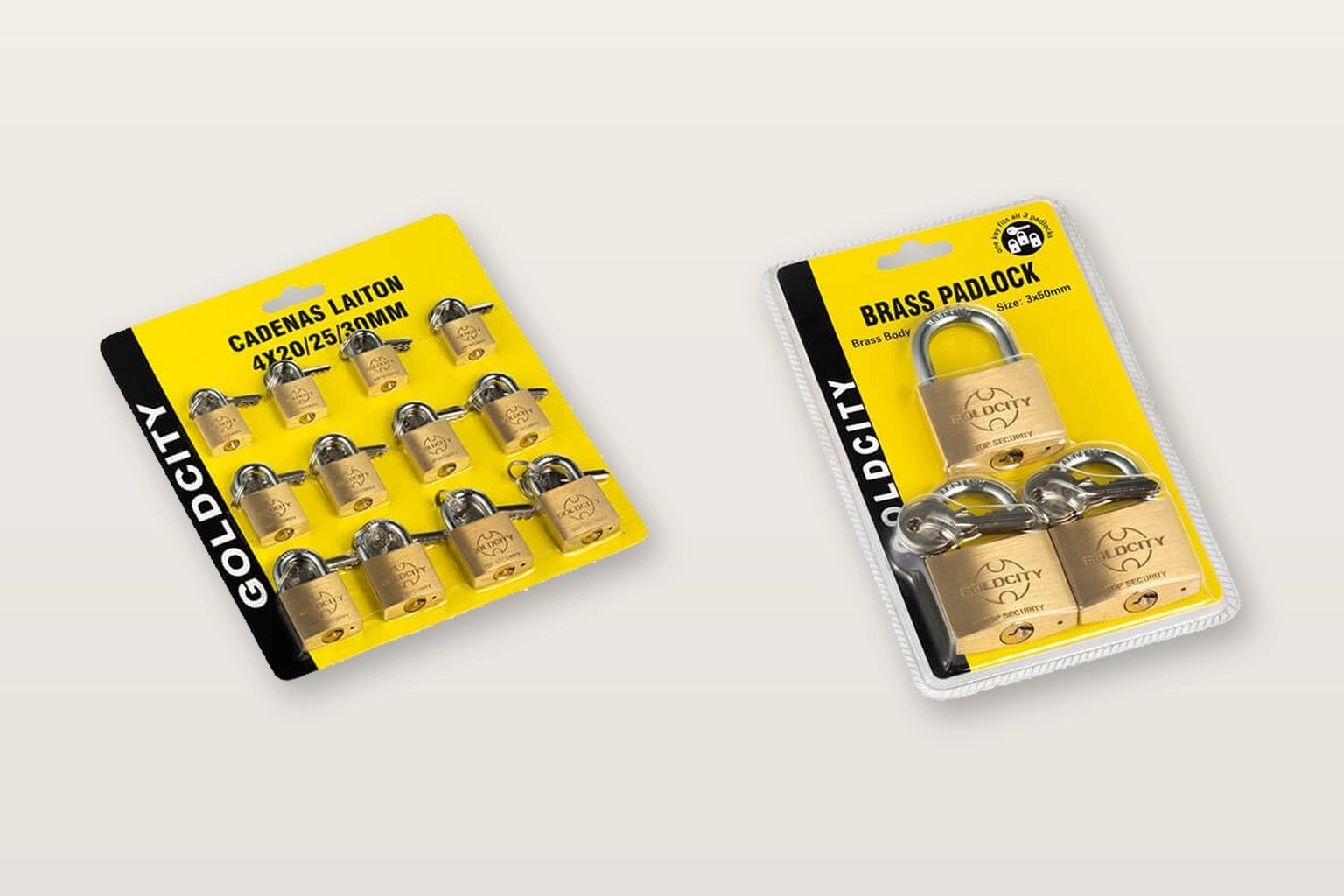
Shackle ends, body edges and key teeth are worth a close look in the packed sample. Loose keys may move away from their intended position; a tight arrangement needs attention to its points of contact. These observations concern the lock inside the pack. The outline of an empty package cannot answer them.
GOLD CITY double-blister-packed brass padlocks, NO.HL401AD–HL407AD, provide the other family for comparison. The purchasing choice is between actual packed configurations: lock position, space for the shackle, key restraint and closure. Double blister should not be read as a promise of two padlocks. The number of locks and keys remains a separate requirement, to be confirmed for the selected product.
A visual approval covers the presentation that was checked. It does not answer whether keys stay in place during handling or whether the pack meets a transport requirement. Those are separate checks to agree for the order, with the test method and acceptance criteria recorded wherever a formal test is required.
The finished sales unit has to work where the retailer puts it. A hanging pack may look balanced when laid flat yet sit poorly on a display once the lock is inside. Pack footprint, hanging position and space for information belong in the retailer’s brief. There is no basis for assuming that one skin-card or blister design meets every store’s requirements.
Barcode review also belongs at the packed-sample stage. Seals, folds or an awkward surface can affect where a code is presented. A scan of the final arrangement checks something that an artwork proof cannot: the code in its intended position on the package. The printed size description and contents statement also need to match the item being supplied.
GOLD CITY’s retail packing options bring the skin-card and double-blister brass-padlock families into the same product selection. That gives a buyer two named formats to discuss with the padlock order. The useful comparison remains the finished sales unit for the intended channel, with its contents and presentation confirmed. Neither family name establishes retailer acceptance or suitability for every lock size.
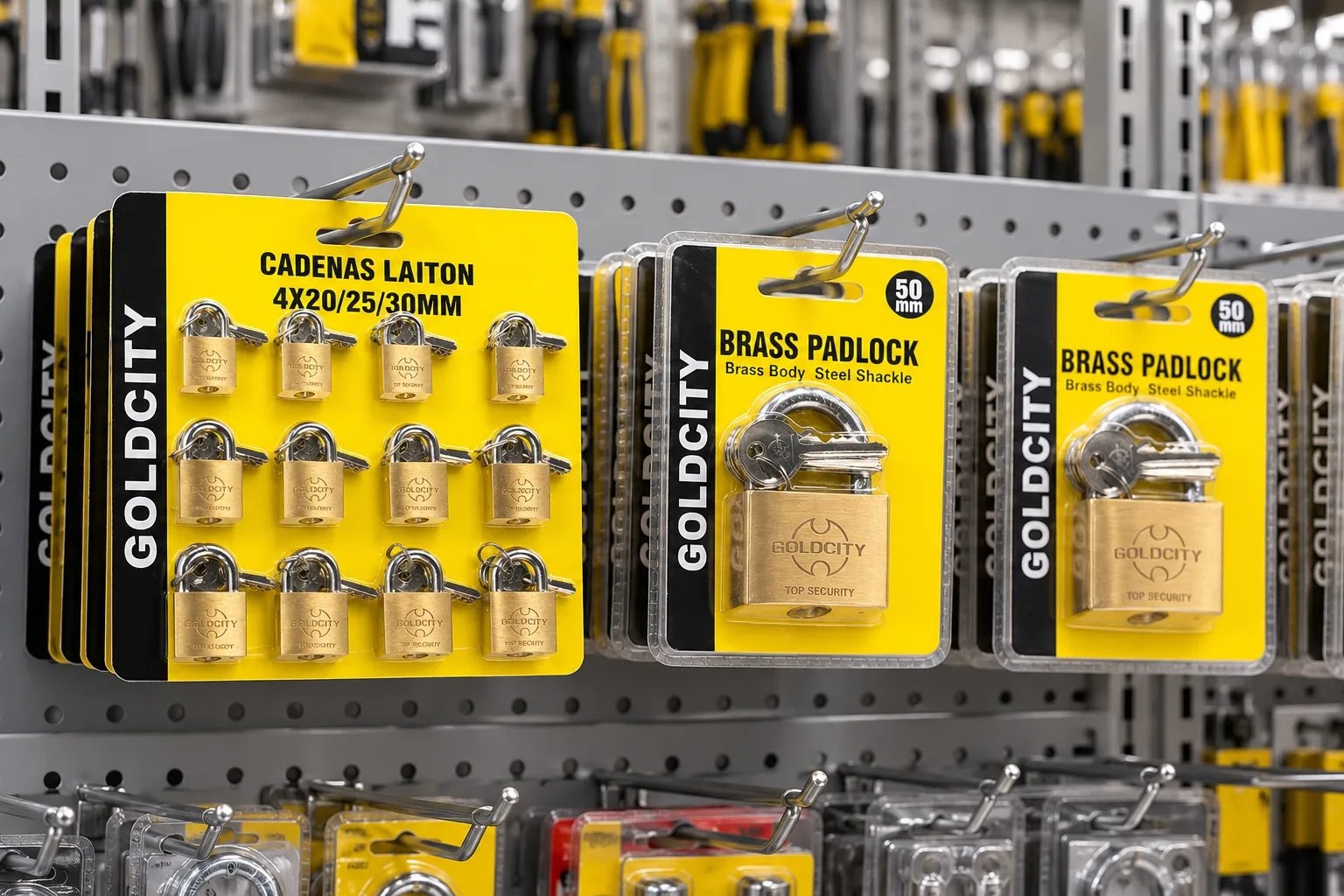
A quotation for a standard pack and another for a revised cavity are not yet comparable offers. The padlock may be the same, while the work around it is different. Purchasing needs to see which work is recurring and which is a separate setup item. A lower unit figure is less informative when its assumptions are unclear.
The inquiry can keep those assumptions visible without becoming a packaging specification manual:
· Exact padlock, key contents and quantity per sales unit.
· Order quantity and required inner-pack or carton arrangement.
· Preferred format, retailer requirements and supplied artwork or barcode data.
· Sample approval requirements and any proposed setup or tooling work.
Skin-card packaging is not always less expensive than blister packaging. Order quantity, existing formats, changes to the product and the work agreed for the project can affect the offer. A useful comparison separates the finished unit cost from any one-time work and identifies what happens on a repeat order. No general price rule can replace the quotation for the actual job.
Private-label projects may change the padlock marking as well as the pack. The OEM padlock project planning guide provides the wider framework for keeping these requirements together. Packaging feasibility, minimum quantities and timing still need to be agreed for the particular project. A launch schedule should use those confirmed terms rather than assume that a new artwork file is the only change involved.
Keeping one card size across a range can simplify the display, but it does not prove that every lock fits the same internal arrangement. Body width is only one dimension. Shackle length and profile, key length and key count can change the space required. A common external outline may still contain several different packing configurations.
Similar product-code stems do not establish interchangeability either. The purchasing record needs to connect each ordered model with the packing reference that was approved for it. Where several sizes share an arrangement, that relationship can be recorded explicitly. Where they do not, a changed sample gives both parties a visible reference for the difference before the order proceeds.
An extra key is a small product change, but it still occupies space. A new shackle profile can affect a different part of the pack. The existing arrangement may remain suitable in either case; that depends on the actual fit. Linking the change request to the packing reference makes the review more precise than a general instruction to retain the old packaging.
A skin-card candidate needs a review of film contact; a blister candidate needs a review of cavity fit. Both still have to present the agreed lock and keys on the intended display. That is the practical basis for choosing padlock retail packaging. The accepted packed sample, rather than the format name, gives purchasing a reference for the order and for any later change.
Buyers can discuss a retail-packed padlock order with GOLD CITY using the preferred model, sales-unit contents, order quantity and destination channel as the starting brief. An existing packaging reference or retailer brief can accompany the inquiry. Where artwork or product details are still open, identifying them at this stage helps define what the quotation and subsequent sample approval need to cover.
The name alone does not answer that question. Lock count and key count are separate order details, to be agreed for the chosen item. A description such as double blister identifies the packing format; the sales-unit contents establish what the retailer receives in that pack.
They may share a card outline, but the fit still needs checking for each lock-and-key configuration. A different shackle or additional keys can change the space and restraint required. The approved reference should identify which models it covers instead of relying on a similar appearance or nominal body size.
The actual quotations decide. A comparison needs the same contents, quantities, artwork requirements and approval scope, with setup or tooling work separated from recurring cost. An existing format may change the offer. Neither skin card nor blister has a universal cost advantage that can safely be assumed before that scope is known.
A defined lock-and-key combination comes first, followed by the intended channel and any retailer requirements. Artwork and barcode data need to match that item. Approval also needs an identifiable finished sample, a named responsible party and a record of any unresolved changes; an undated artwork file is an incomplete production reference.
TEL: +86-573-87471884 / 87471697
FAX: +86-573-87471537
Address: No. 205 Xinjiang Road Changan Haining, Zhejiang, China
E-mail: howardshen@263.net, goldcitylock@hotmail.com
 浙公网安备33048102250808号