TEL: +86-573-87471884 / 87471697
FAX: +86-573-87471537
Address: No. 205 Xinjiang Road Changan Haining, Zhejiang, China
E-mail: howardshen@263.net, goldcitylock@hotmail.com
Welcome to our website!

 Language

For wholesalers comparing brass vs steel padlocks, the first question is which parts the material names refer to. Brass may describe the body, with hardened steel used for the shackle. Steel may describe an outer shell over brass. Once those details are clear, the models can be compared for the intended installation, exposure and security requirement. Price and working life still need their own evidence; the body label cannot supply either.
At quotation stage, this can be a three-way comparison: an exposed brass body, a steel-covered brass body and a steel-padlock model. All three may belong on the shortlist. The important point is to price the construction actually offered, then decide what role it fills in the distributor’s range or the project. A broad material label can obscure that difference.
The shackle passes through a hasp or chain; the lock body houses the mechanism. Some designs add an outer cover. These are separate entries in a purchasing description. Brass padlock usually identifies a body category, while the shackle can use another metal. A photograph can help establish the shape. Its color is less useful: a silver surface may be a finish over a different material.
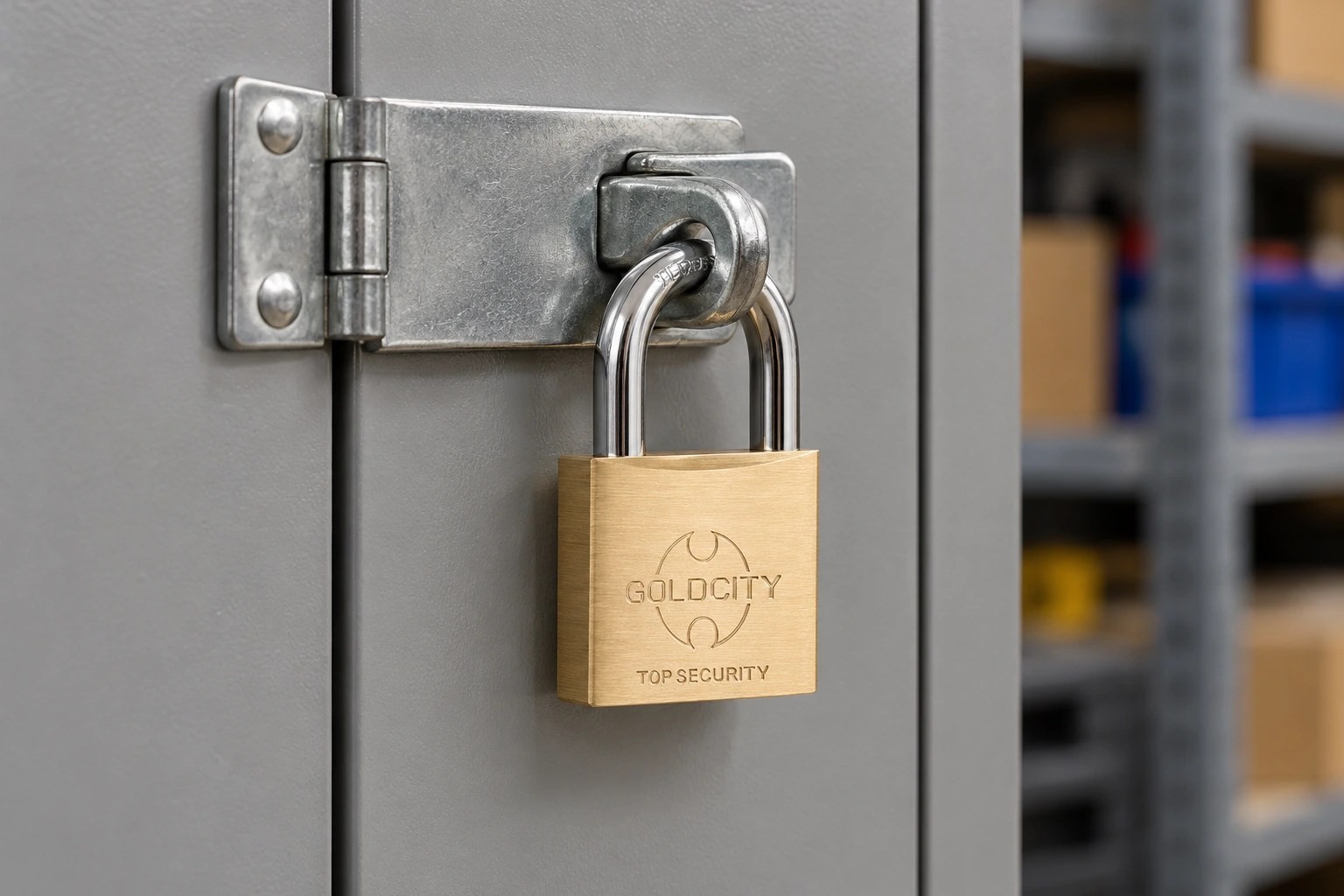
The solid brass bodies and hardened steel shackles of GOLD CITY heavy-duty brass padlocks, NO.HL400A–HL407A, illustrate why the two components need separate descriptions. For a wholesaler comparing this family with another brass line, the shackle specification belongs beside the body material. A change to either part is a construction difference to record, even if the general product name stays the same.
Brass belongs to the copper-zinc alloy family, with a range of compositions and properties. Corrosion resistance is one reason for its use, but that general property does not establish the alloy in a particular padlock. Nor does it give the working life of the assembled lock. Purchasing documents need to distinguish a material description from a performance claim about the finished item.
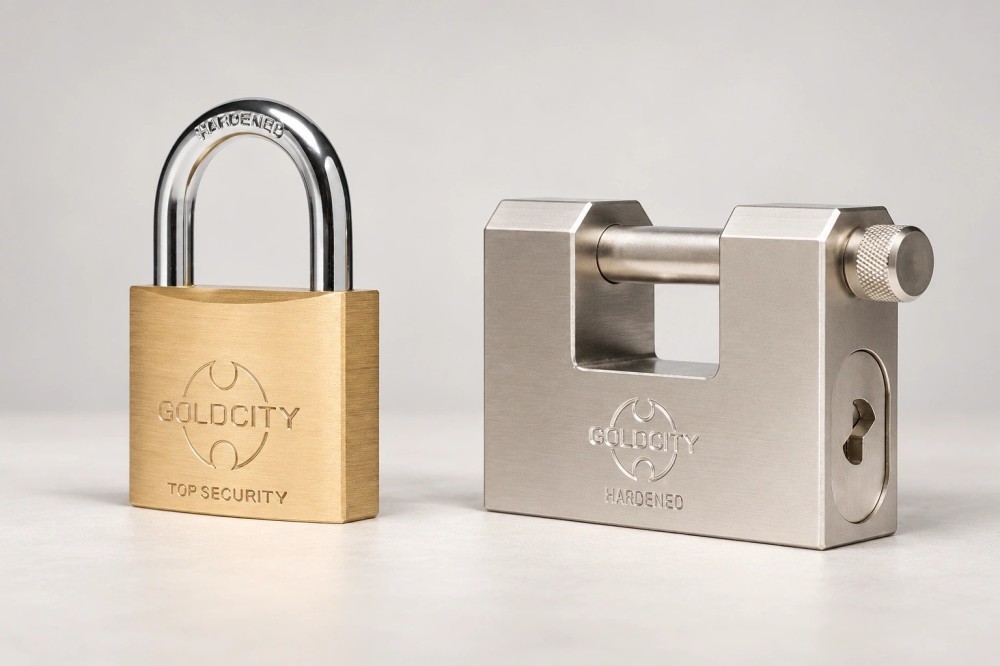
An exposed brass body and an armored brass body are different buying options, even though both contain brass. This is easy to lose in a quotation headed steel padlocks. The relevant question is what the steel component covers and what remains underneath it. Otherwise, a buyer may compare an outer shell with a body material as though they describe the same thing.
GOLD CITY full armored padlocks, NO.9960–9990, use a hardened, chromed steel shell and lid over a brass lock body. There are two material layers to specify here. A buyer seeking a steel-bodied alternative is asking a different question from a buyer seeking this covered brass construction. Keeping both layers in the description makes that difference clear at quotation and reorder.
For a project with a named security requirement, the supporting report needs to identify the model and configuration being offered. A description such as hardened steel is a construction detail; it is not an attack-test result. This distinction leaves room for a proper comparison of the designs without assigning a resistance time or grade that has not been established.
The order also needs to distinguish stock for general resale from a named project requirement. Any documents required by the final customer belong in the inquiry before the model is approved.
A quotation that says outdoor still leaves the location open to interpretation. A sheltered entrance and a gate in salt-laden air are quite different requests. The inquiry can identify shelter, expected wetting and any coastal exposure in plain language. Opening frequency and the available maintenance arrangements complete that description, giving the model discussion a defined set of conditions.
The corrosion question extends beyond the body. A brass candidate still has a shackle and a working mechanism; a steel candidate needs a defined material and finish. For either construction, the inquiry can specify the conditions of use and request the evidence needed for that application. This keeps the comparison tied to the complete lock instead of an isolated material property.
For coastal orders, the coastal padlock sourcing guide develops those exposure questions further. In this comparison, the purchasing decision is narrower: whether each shortlisted model addresses the stated environment. Appearance changes and continued operation are separate acceptance questions. Both can be discussed without turning the material label into an unsupported promise of service life.
Body width is convenient for describing a range, but it does not define the space inside the shackle. A lock can match the nominal size of an existing item and still fail to pass through the receiving hardware. The important fit checks include shackle diameter, usable opening, access for the key and room to close the lock without forcing it.
The GOLD CITY hardened-steel padlock range, NO.2015-66–84, offers another family for the shortlist. When it is compared with brass models, fit still needs checking against the receiving hardware. A shared nominal size does not guarantee the same opening or key access. A sample check can resolve those differences before the model, construction and required dimensions are put together in the order.
Handling deserves a separate check. Restricted key access or use with gloves can make an otherwise suitable shape inconvenient. Weight should be compared using matched finished samples if it affects the order. A carton weight cannot settle the issue unless the packing contents are known; nor does a heavier sample, by itself, demonstrate better security. These are different purchasing questions.
A distributor may have room for both brass and steel constructions. Range planning then concerns the job each model will do. Two items sold for the same requirement need a clear point of difference; items intended for different uses need descriptions that keep those uses clear. Simply placing brass and steel at different levels in the price list does not explain either stocking decision.
A price difference between quotations may come from the keying arrangement, finish or pack as well as the material. That becomes easier to see when the offers are laid out against the same application. Four fields are enough for a first comparison:
Field | Basis for comparison | Difference to record |
Construction | Body, shackle and any outer shell | Material and finish of each component |
Installation | The same receiving hardware | Opening, diameter and key access |
Use conditions | The same exposure and security requirement | Supporting model-specific evidence |
Order scope | Quantity, keying and packing | Samples, extra work and included costs |
The next step in a brass padlock supplier inquiry is to state the order scope alongside the shortlist. Purchasing staff can keep the brief to four lines:
· Application, receiving-hardware dimensions and exposure.
· Required body, shackle and outer-shell construction.
· Quantity, keying arrangement and packing.
· Any named performance requirement and the documentation needed.
Once a construction has been selected, the approved model and sample reference belong with the order. A later change to a shackle, finish or cylinder can change the comparison even if the family name is familiar. Reorders need that reference too. It gives the next quotation a defined starting point instead of relying on the appearance of an earlier shipment.
A useful brass vs steel padlocks comparison ends with an identifiable model and a reason for selecting it. The body specification is the first filter. Shackle construction, any outer cover, fit and exposure complete the product comparison; matched keying and packing complete the quotation. This allows a distributor to explain the choice to a customer and gives purchasing a defined reference for the next order.
Purchasing teams can discuss a bulk padlock requirement with GOLD CITY by providing the application, critical fit dimensions, preferred construction and destination. Quantity, keying and packing belong in the same inquiry. Where a project calls for particular performance documents, including that requirement at the outset keeps it attached to the proposed model throughout the discussion.
No. Body and shackle are separate components with separate material specifications. GOLD CITY’s HL400A–HL407A family, for example, combines a solid brass body with a hardened steel shackle. Both details belong in the purchase specification; a request that says only steel could be interpreted as a different body construction.
An armored padlock can have a brass body underneath its steel covering. That is the arrangement in GOLD CITY’s 9960–9990 family. The buyer needs both material descriptions. Any required security grade is a separate matter, supported by documentation for the chosen model.
Comparable prices require a defined order scope. Dimensions, keying, finish, packing and quantities need to be matched, with any sample or setup work identified separately. The actual supplier offers can then be compared on that basis. Body material alone leaves too much of the finished product unspecified.
TEL: +86-573-87471884 / 87471697
FAX: +86-573-87471537
Address: No. 205 Xinjiang Road Changan Haining, Zhejiang, China
E-mail: howardshen@263.net, goldcitylock@hotmail.com
 浙公网安备33048102250808号