TEL: +86-573-87471884 / 87471697
FAX: +86-573-87471537
Address: No. 205 Xinjiang Road Changan Haining, Zhejiang, China
E-mail: howardshen@263.net, goldcitylock@hotmail.com
Welcome to our website!

 Language

A padlock installed near a harbor can look intact while salt, moisture, and dirt are already affecting its moving parts. The first warning may be small: a key starts to drag, the cylinder feels rough, or the shackle needs an extra pull. Across a marina, port warehouse, or coastal utility project, the same issue can turn into repeated maintenance work.
For importers, marine hardware distributors, contractors, and facility procurement teams, marine padlocks are not simple catalog items. Their performance affects replacement costs, customer claims, stock planning, and repeat orders.
When evaluating a padlock manufacturer or marine padlock supplier, the review needs to begin with the actual exposure conditions. Component materials, physical fit, corrosion evidence, quality controls, and packing data come next.
A covered warehouse near the coast may face high humidity and airborne salt without receiving direct rain. A lock on an open marina gate may also encounter wind-driven spray, dust, repeated wet handling, and long periods of dampness.
For procurement purposes, coastal exposure can be divided into three practical groups:
· Sheltered locations with coastal humidity
· Open-air sites exposed to rain and salt-laden air
· Installations receiving direct spray, splash, or repeated wetting
This distinction gives the supplier a clearer basis for model selection, sample preparation, and testing. It also prevents broad terms such as “marine,” “weather-resistant,” or “anti-rust” from replacing measurable requirements.
Surface discoloration may affect appearance, but functional corrosion creates the greater operational problem.
Salt deposits around a keyway can make cylinder rotation rough. Moisture around the shackle openings may interfere with spring movement or locking action. A single stiff lock appears minor. Across dozens of gates, cabinets, or storage points, the cost changes quickly.
Commercial consequences may include replacement stock, cutting labor, emergency access, extra freight, warranty handling, and lost confidence in the product line. For bulk buyers, corrosion risk belongs in the landed-cost calculation.
The body and shackle receive most of the attention in product photographs, but internal parts also influence daily operation.
A technical review covers:
· Body material and surface finish
· Shackle material, diameter, and clearance
· Spring and locking components
· Cylinder and pin construction
· Locking method
· Available corrosion-test records
A durable-looking lock body has limited value when an internal spring begins to bind. In the same way, a corrosion-resistant shackle cannot compensate for a cylinder that becomes difficult to operate.
Claims involving waterproofing, rustproof performance, stainless steel grades, IP ratings, or a fixed number of salt-spray hours require model-specific evidence. General factory capability does not automatically confirm the construction or test result of every finished product.
A corrosion-resistant padlock can still be wrong for the locking point. The shackle may not pass through the hasp, or excessive clearance may leave more exposed metal than the application requires.
Model selection depends on:
· Shackle diameter
· Inner shackle height and width
· Hasp or chain opening
· Installation space
· Required security level
A dock box, port gate, utility cabinet, and maintenance enclosure do not carry the same risk. Treating fit, corrosion performance, and physical security as separate approval points creates a more accurate purchase specification.
More detailed guidance on body size, shackle clearance, key systems, and packing is available in the brass padlock selection guide.
GOLD CITY’s NO.9230–9260 Marine Type Brass Padlock combines a stainless steel shackle with a chromed brass body and stainless steel spring. The operating structure also includes a nickel-plated brass cylinder and double shackle locking. The series covers 30 mm, 40 mm, 50 mm, and 60 mm body sizes.
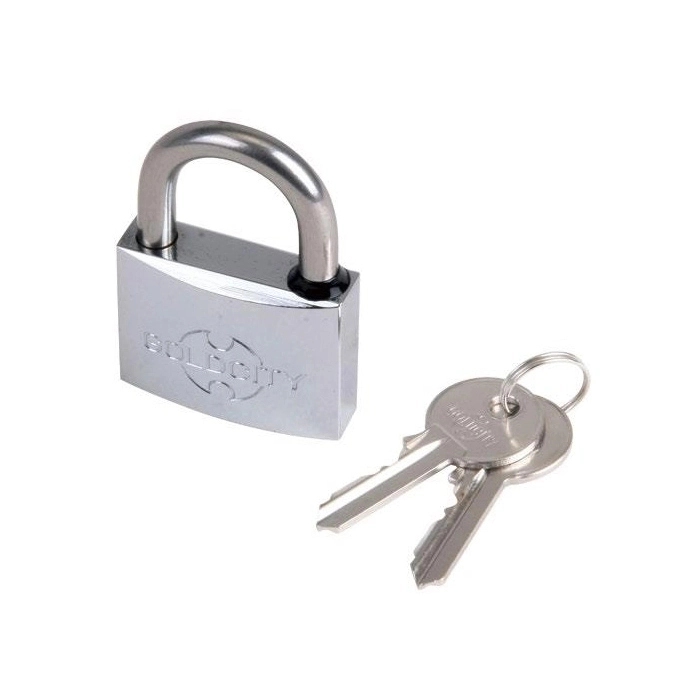
This configuration places stainless steel on two components that influence exposed operation: the shackle and spring. The brass-based body and cylinder support the series’ positioning for marine hardware, outdoor security, and damp coastal distribution channels.
Product approval depends on the intended environment and the test requirements agreed during sourcing.
Body width does not identify the correct application by itself. The final model still needs to fit the actual hasp, chain, gate, or enclosure.
Packing data serves a different purpose. It helps importers estimate freight, warehouse capacity, and landed cost.
Model | Body size | Quantity per carton | Gross weight |
9230 | 30 mm | 20 dozen | 23 kg |
9240 | 40 mm | 10 dozen | 20 kg |
9250 | 50 mm | 5 dozen | 18 kg |
9260 | 60 mm | 5 dozen | 25 kg |
GOLD CITY also provides carton dimensions and net weight for each model. The complete packing data supports mixed-model orders, container planning, wholesale pricing, and repeat-order preparation.
For buyers sourcing wholesale brass padlocks, clear carton information is part of the commercial specification, not an administrative extra.
Material selection provides the starting point. Final procurement approval still depends on verifiable test conditions and functional results.
ISO 9227:2022 covers neutral salt spray, acetic acid salt spray, and copper-accelerated acetic acid salt spray procedures. It defines the apparatus, reagents, and testing process used to assess corrosion resistance.
The standard does not assign one specimen type, exposure period, or interpretation method to every product. Those details come from the relevant product specification or purchasing agreement. It is also not intended to predict long-term corrosion resistance or rank unrelated materials by expected service life.
The phrase “tested to ISO 9227” is therefore incomplete without supporting test details.
A useful corrosion report records:
· Test method and exposure duration
· Finished padlock, component, or raw material tested
· Sample preparation and condition
· Visual acceptance criteria
· Functional acceptance criteria
· Laboratory name
· Test and report dates
Testing a plated component is not the same as testing an assembled padlock. A report produced for one model, finish, or batch may not apply to a different product.
Visual inspection also provides only part of the result. Post-test checks can include key insertion, cylinder rotation, shackle release, relocking, and repeated opening cycles.
A lock may show little visible corrosion and still operate poorly. Minor surface change may also appear while the mechanism continues to function. A useful evaluation records both appearance and operation.
Sample approval begins with fitting the padlock to a representative gate, chain, cabinet, hasp, or enclosure. This confirms clearance and handling before mass production.
Mounting position also matters. A lock pressed tightly against a metal hasp can trap moisture differently from the same model hanging freely. A horizontal installation may collect water near the shackle openings. Dust, grease, and frequent handling add another layer of real-world variation.
For corrosion-sensitive projects, the sample plan can combine agreed environmental exposure with functional checks. The purchase order then references the approved model, dimensions, materials, finish, packing, and test requirements.
GOLD CITY’s quality process includes raw-material inspection, in-process checks during cylinder machining and pin assembly, and a smooth-operation test on finished locks. The company also supports keyed-alike and master-key systems, along with OEM and ODM options for appearance, cylinders, keys, and packaging.
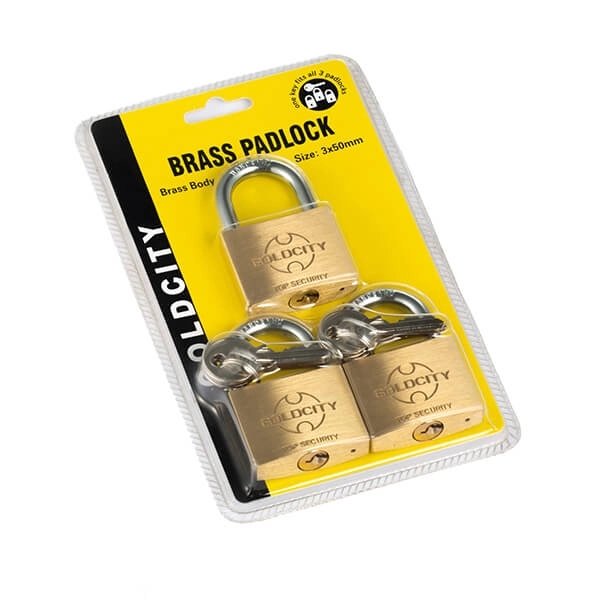
These capabilities are most useful when the inquiry remains specific. A complete RFQ includes:
· Application and exposure conditions
· Target model or body size
· Estimated order quantity
· Keying arrangement
· Packaging format
· Destination market
· Sample requirements
· Requested test documents
The approved sample, technical specification, packing method, and carton markings then become the reference for production inspection and future repeat orders.
GOLD CITY is the brass padlock brand of Haining Gold God Metalwork & Locks Co., Ltd. Founded in 1975, the factory has annual padlock production exceeding 10 million units. Its manufacturing resources include CNC machinery and product-testing equipment, while ISO 9001:2015 is identified as the company’s quality management standard.
The sourcing process runs from inquiry and sample testing to production, shipment, and final acceptance. Custom options include keyed-alike systems, master-key systems, product appearance, cylinders, keys, and packaging.
For long-term buyers, repeatable production quality matters as much as the first approved sample. Model references, material requirements, dimensions, packing, and shipment quantities need to remain stable across orders. Consistent output is central to approving a padlock manufacturer for ongoing supply.
Coastal padlock sourcing starts with the real environment, not a broad product label. Salt exposure, rainfall, mounting position, component construction, physical fit, test evidence, and production controls all influence the final purchasing decision.
GOLD CITY’s NO.9230–9260 brass padlocks provide a 30–60 mm range built around a stainless steel shackle, chromed brass body, stainless steel spring, and double-locking structure.
Procurement teams can contact GOLD CITY with application details, exposure conditions, required sizes, quantities, keying needs, packing format, destination market, and test expectations to request samples, technical confirmation, carton data, and a commercial quotation.
A: Marine padlocks are intended for sales channels and projects where coastal humidity, salt-laden air, rain, or spray creates a higher corrosion risk. Evaluation covers the complete lock assembly, installation conditions, and available test evidence rather than a marine-use label alone.
A: Brass padlocks can form part of a corrosion-conscious product range, but suitability depends on the complete assembly, direct salt exposure, mounting position, maintenance conditions, and verified test results.
A: Selection depends on the hasp opening, shackle diameter, inner clearance, installation space, and security requirement. Body width alone does not confirm compatibility.
A: A useful report records the test method, duration, sample type, preparation, visual and functional acceptance criteria, laboratory, and test date. The standard number alone does not define field life.
A: A complete inquiry includes the application, exposure level, model or size, quantity, keying arrangement, packing requirements, destination market, sample request, and required corrosion-test documents.
TEL: +86-573-87471884 / 87471697
FAX: +86-573-87471537
Address: No. 205 Xinjiang Road Changan Haining, Zhejiang, China
E-mail: howardshen@263.net, goldcitylock@hotmail.com
 浙公网安备33048102250808号