TEL: +86-573-87471884 / 87471697
FAX: +86-573-87471537
Address: No. 205 Xinjiang Road Changan Haining, Zhejiang, China
E-mail: howardshen@263.net, goldcitylock@hotmail.com
Welcome to our website!

 Language

Self-storage padlocks should be selected from the door interface outward. A disc padlock is a strong candidate only when its shackle enters the latch cleanly, the body clears the door, the key remains usable, and the closed assembly leaves no avoidable working space around the shackle.
This guidance is for facility operators, distributors, importers, and procurement teams specifying locks across multiple units. It explains how to identify compatible lock forms, check shackle exposure and environmental conditions, approve a representative sample, and record a repeatable bulk-order specification. A familiar product label or nominal body size is not enough to confirm fit or performance.
Inspect the latch, hasp, or lock opening before comparing products. Record whether the door uses an exposed hasp, recessed opening, slide bolt, or integrated cylinder arrangement. Also note any obstruction that could stop the lock body from rotating into position or prevent a user from inserting and turning the key. Facility rules may limit acceptable lock forms, so include them in the purchasing brief.
The locked assembly is the unit of evaluation. A disc body may cover more of the shackle than a conventional U-shaped padlock, but that advantage disappears if the latch forces the lock to sit at an angle or leaves the shackle partly open.
A fit check should reproduce the way tenants or staff will open and close the actual door, including available hand space and nearby door edges.
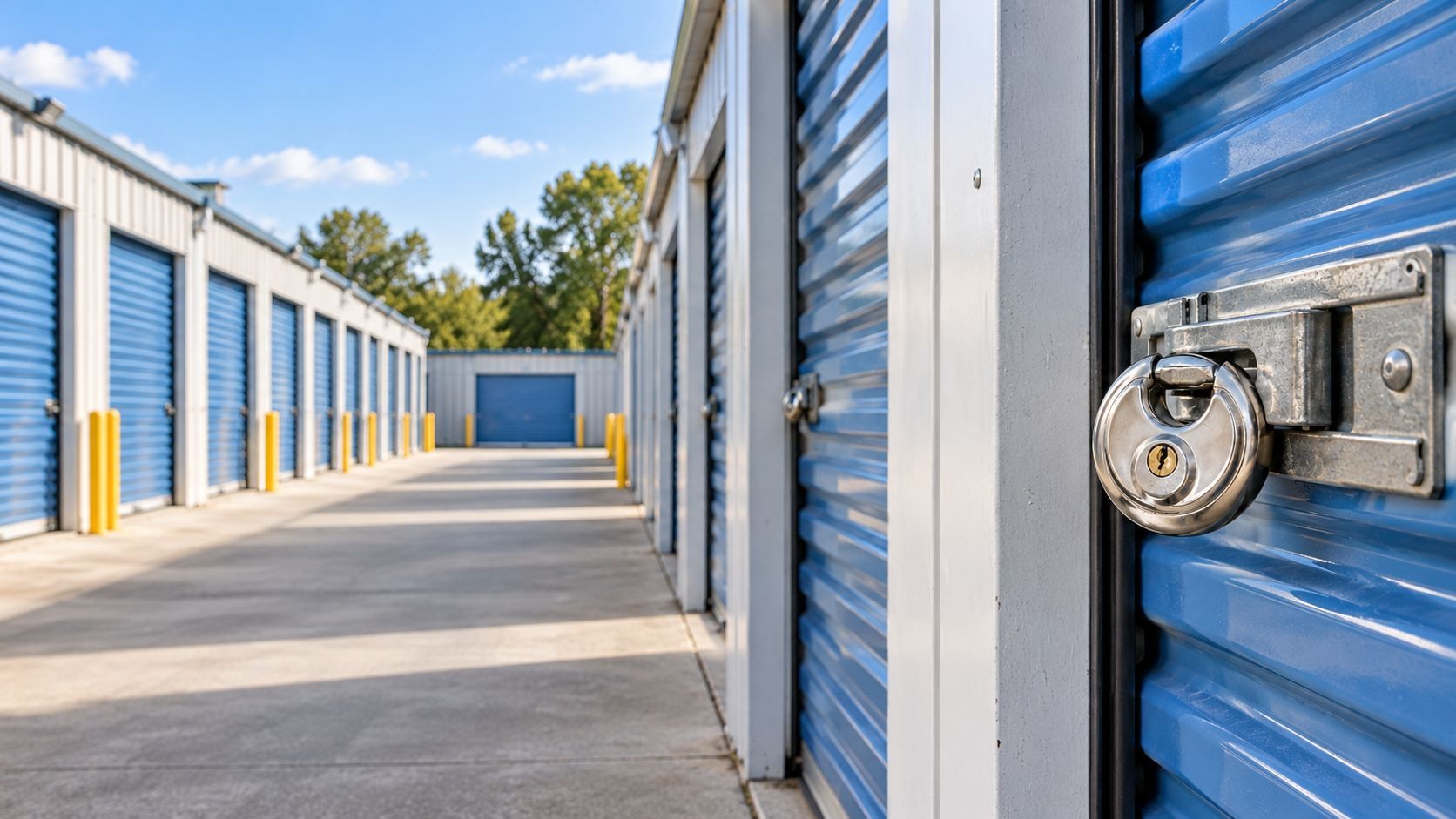
The GOLD CITY discus padlock range is relevant when a storage latch accepts a compact disc body and limited shackle opening. A conventional padlock may suit a different hasp geometry, while a cylinder lock fits into compatible door hardware rather than hanging from a shackle.
Lock form | Use it when | Main check |
Disc padlock | The latch accepts the compact body and short exposed shackle | Body clearance and usable shackle opening |
Conventional padlock | The hasp needs a wider or taller U-shaped opening | Shackle diameter, width, height, and body space |
Cylinder lock | The door has a compatible integrated cylinder fitting | Door hardware and facility system compatibility |
Do not select one form for every property unless the door hardware is genuinely standardized. A multi-site operator may need separate approved groups for different latch designs.
Keeping those groups distinct protects repeat orders from a common error: supplying the correct model for one property to a second property with similar-looking but incompatible doors.
For each door group, confirm the receiving-hole diameter, shackle diameter, usable opening, lock-body envelope, key access, and clearance needed to move the lock through a complete cycle.
Use millimeters for the purchasing record and retain a drawing or labeled photograph. If the opening is tight, record the limiting dimension and an agreed tolerance rather than rounding the value to a familiar nominal size.
This application check is narrower than a complete padlock-measurement method. Its purpose is to decide whether the lock can enter, close, operate, and be removed from a self-storage latch.
Test more than one representative door when a facility has mixed generations of hardware, repaired latches, or visible wear. One successful installation does not prove that every unit in the portfolio uses the same geometry.
· Confirm that the shackle passes through the narrowest part of the latch without forcing it.
· Check that the body does not collide with the door skin, rail, or recessed housing.
· Leave enough working clearance for the authorized user to insert and turn the key.
· Open and close the representative door several times before approving the fit.
· Record the door group and approved lock model together for future orders.
Shackle exposure depends on the complete locked assembly. Review how much metal remains accessible, whether the latch shields either side, and whether the body can be twisted against the door.
A disc shape can reduce exposed length in a compatible latch, but shape alone is not an attack rating. The door, hasp, fasteners, and surrounding structure may still determine the weakest point.
Environment is a separate decision. Indoor corridors, covered exterior doors, and fully exposed outdoor units create different moisture and contamination conditions. Material names can guide a shortlist, and conventional stainless-steel padlocks offer another form to compare where the latch allows it.
However, stainless steel does not by itself prove a salt-spray duration, field life, or weatherproof rating. Request applicable evidence for any stated environmental performance and include post-exposure operation in the acceptance criteria.
A useful RFQ separates the facility portfolio into door groups and assigns a verified requirement to each group. When the portfolio includes doors that cannot accept a disc form, review other published padlock categories rather than stretching one model across incompatible interfaces. The commercial request should allow a supplier to identify a candidate model, prepare a representative sample, and reproduce the approved configuration later.
For a mixed portfolio, use the published padlock categories only after each door group has been defined. Keep the following fields in the RFQ and purchase record:
· Door and latch type, supported by critical dimensions or a drawing
· Indoor, covered outdoor, or directly exposed operating environment
· Required quantity by door group and any future expansion allowance
· Keying request and the person responsible for the access record
· Packing, labeling, destination market, and shipment-unit requirements
· Sample quantity and the representative installations used for approval
· Approved model, revision, packing reference, and reorder identifier
Avoid asking for a generic heavy-duty storage lock without defining the interface or required evidence. That phrase cannot tell a supplier which body shape fits, how much shackle opening is available, or whether a claimed performance level has been tested. A concise specification with measurements and conditions is more useful than a long list of unverified security adjectives.
For facilities that accept a disc form, GOLD CITY's stainless-steel disc padlock 2026-70 is a shortlist candidate. Its published construction identifies a stainless-steel body, hardened-steel shackle, brass cylinder and keys, and brass pin.
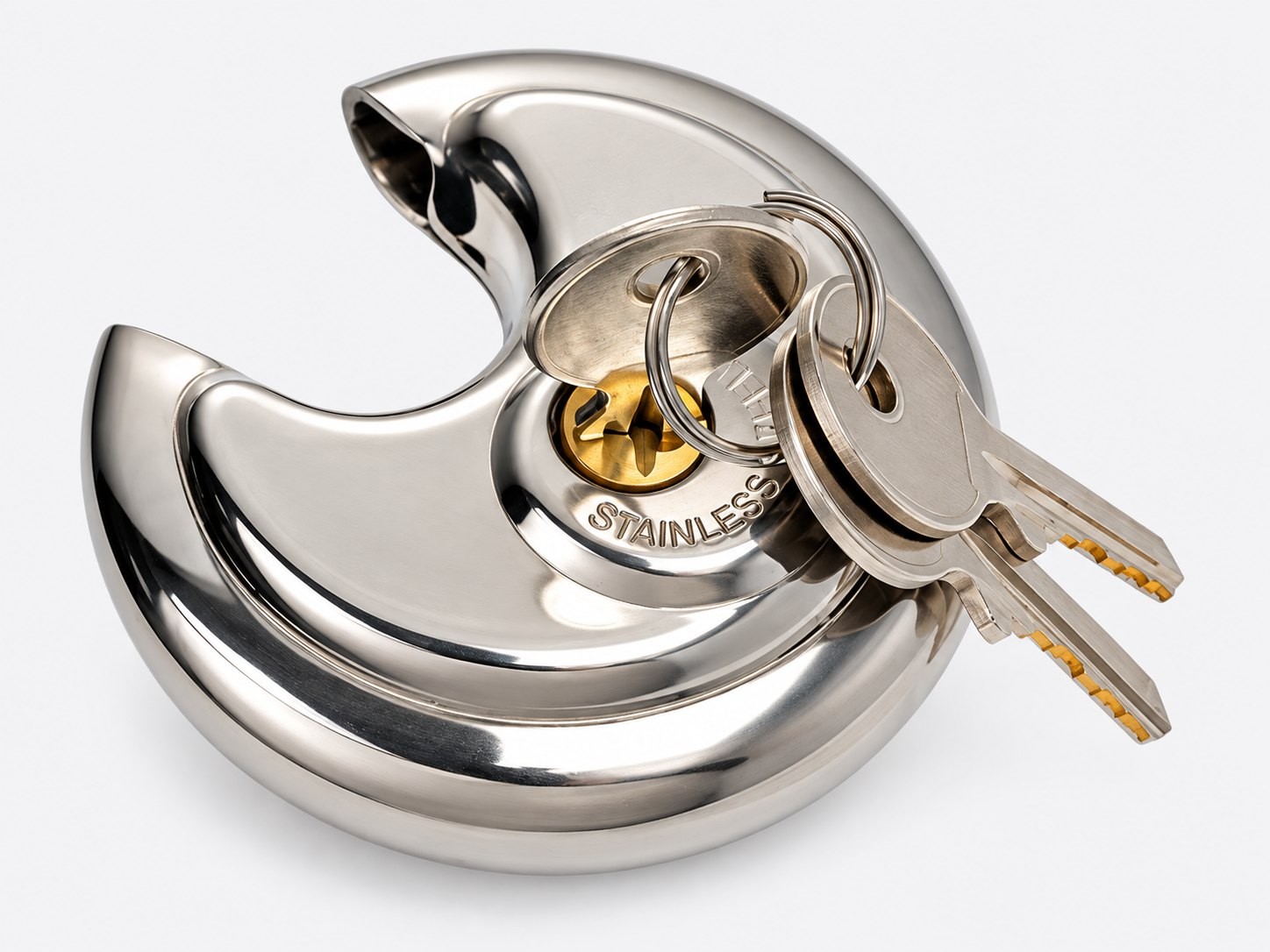
Those details help a buyer compare material and component requirements, but they do not establish universal door fit, weatherproofing, an attack rating, or insurance acceptance. Approval should therefore depend on the facility interface, requested evidence, and a production-representative sample rather than the model name alone.
GOLD CITY manufactures physical padlocks and maintains separate ranges for discus and conventional forms. This lets a distributor keep one sourcing conversation while matching different doors to different hardware, but each model still needs its own approved specification.
For an inquiry, identify the door group, latch photographs or drawing, critical dimensions, quantity, keying request, destination market, packing format, and sample requirement. The resulting record can follow the approved model into production and later reorders, reducing accidental substitutions between similar-looking locks.
Use a production-representative sample on the actual door or a fixture that reproduces the latch. Confirm insertion, locking, unlocking, key access, body clearance, and removal.
Check the requested key configuration, markings, packing, and model reference at the same time. If the facility uses several door groups, approve and label a sample for each group instead of treating one result as universal.
Retain the approved sample reference with the purchase order and inspection criteria. A repeat order should cite the same model, fit data, keying instruction, packing, and revision unless an intentional change has been approved. When the door hardware changes, reopen the fit decision rather than assuming the previous lock remains compatible.
Self-storage padlocks work best when the door interface controls the choice. Confirm the lock form, critical clearances, key access, shackle exposure, operating environment, and evidence requirements before approving a facility-wide order.
A disc padlock can be a practical candidate for compatible latches, but neither its shape nor its material proves universal fit or a security rating. Standardize only after representative doors have passed the same sample check.
To review a self-storage lock requirement, Contact GOLD CITY with the door group, latch drawing or photographs, critical dimensions, quantity, keying request, destination market, packing format, and sample plan.
No. A disc padlock must match the latch opening, body clearance, and available key access. Some doors use an integrated cylinder or a hasp that needs a different shackle geometry. Confirm the interface and test a representative installation before ordering for multiple units.
Confirm the receiving-hole size, shackle diameter, usable shackle opening, lock-body envelope, and clearance for operating the key. Record the limiting dimension in millimeters and keep a labeled photograph or drawing with the approved model.
No. Material identity does not establish a weatherproof rating, corrosion-test duration, or expected outdoor life. Describe the exposure conditions and request evidence that applies to the finished model and acceptance criteria. Functional checks after any agreed exposure test are also relevant.
Include door groups, latch data, critical dimensions, exposure, quantity, keying request, packing, destination market, sample requirement, and the reference needed for future reorders. Separate incompatible door groups rather than asking one lock to cover every unit.
TEL: +86-573-87471884 / 87471697
FAX: +86-573-87471537
Address: No. 205 Xinjiang Road Changan Haining, Zhejiang, China
E-mail: howardshen@263.net, goldcitylock@hotmail.com
 浙公网安备33048102250808号