TEL: +86-573-87471884 / 87471697
FAX: +86-573-87471537
Address: No. 205 Xinjiang Road Changan Haining, Zhejiang, China
E-mail: howardshen@263.net, goldcitylock@hotmail.com
Welcome to our website!

 Language

A keyed padlock is better when a commercial site needs a documented access plan, controlled key issue and repeatable protection across doors. A combination padlock can be easier when users change often, keys are difficult to manage or a shared code is acceptable.
Neither format is automatically safer. The decision depends on who needs access, how quickly it must change, what happens when a key or code is lost, and how the order will be replenished.
For importers, facility suppliers and hardware distributors, compare the two formats as operating systems rather than as isolated products. Define the user groups, number of locking points, replacement process, environment, security expectations and sales channel.
Then ask for a sample and a written configuration that can be reproduced in the next shipment. This avoids buying a lock that works on day one but creates unmanaged access or confused reorders later.
A keyed padlock opens with a physical key. Access is assigned through possession, so the site can issue, collect and audit keys. A combination padlock opens with a code. Access is assigned through knowledge of the code, removing routine key handling but creating a different control task: setting, recording and changing combinations.
The distinction matters when a site has turnover or multiple doors. Keys can be duplicated, misplaced or left with former staff; codes can be shared, observed or forgotten. Treat both as credentials.
The procurement brief should state who controls them, how a lost credential is handled and whether the lock will secure a high-value asset, a low-risk cabinet or a temporary work area.
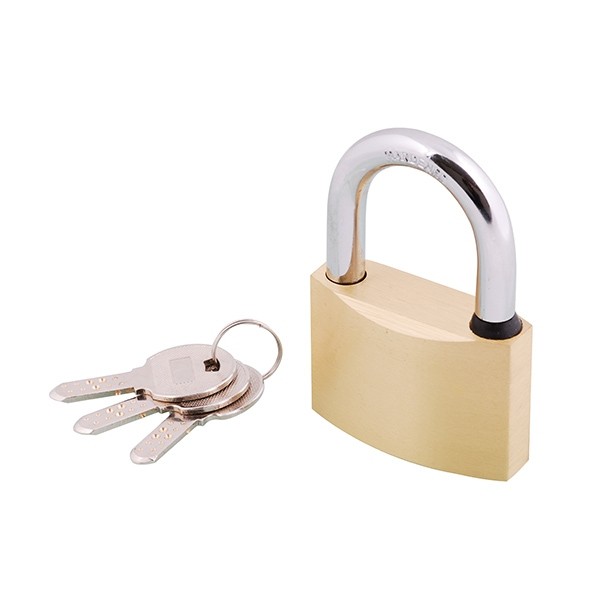
Choose a keyed padlock when the access list is stable, accountability matters and the site can store or issue keys. A key register provides a physical trail for maintenance rooms, utility cabinets, storage cages and contractor access.
Keyed locks also suit buyers who need a defined key plan for reorders, where the original configuration must be reproduced rather than replaced with an unrelated code.
Keyed systems become more useful as the site separates doors or teams. Keyed different keeps locks on separate key groups, while keyed alike lets one authorised team operate several locks.
A master-key arrangement may be appropriate for a larger hierarchy, but it should be specified as an access design, not added casually to a product line. Keep the key plan with the model and purchase reference.
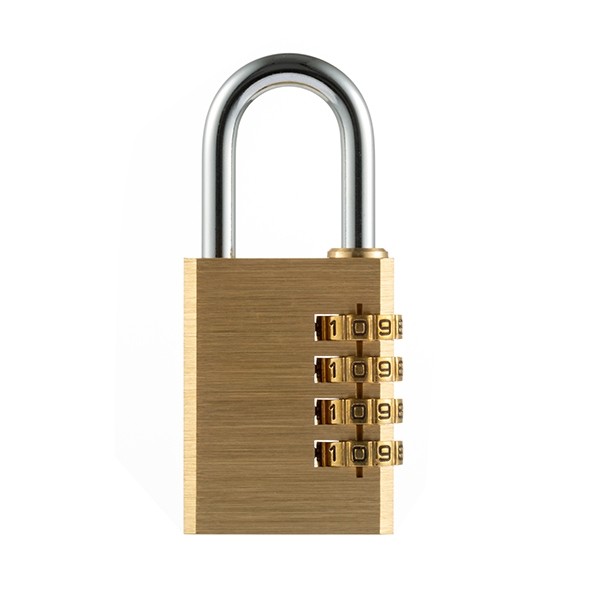
A combination padlock can reduce the administration of physical keys when a team shares a low- to medium-risk locking point. A brass combination padlock can suit temporary crews, equipment pools and lockers when authorised users change more often than the hardware.
Before choosing it, decide who may set or change the code, how the code is stored, and what happens when a former user still knows it.
Decision factor | Keyed padlock | Combination padlock |
Credential | Physical key to issue and recover | Code to set, record and change |
Turnover | Replace or collect keys; review duplicates | Change code and remove old code from instructions |
Multiple locks | KD, KA or master-key plans can separate or share access | One code may open one or several locks, depending on the design |
Accountability | Key possession can be registered | Shared code may reduce individual traceability |
Reorder control | Keep keyway and key-plan records | Keep code-management and model records |
Typical fit | Stable teams, controlled cabinets, facilities | Changing teams, lockers, temporary or shared-use points |
The table is a decision aid, not a security rating. Physical attack resistance still depends on body construction, shackle design, the hasp or anchor and the environment. A keyed padlock with a poor installation can be weaker in practice than a combination padlock fitted to a protected point. Compare the complete locking system after the access decision is clear.
Keyed different (KD) gives each lock its own key combination. It is useful where doors, customers or locations must stay separated. Keyed alike (KA) lets one key operate a defined group, reducing the number of keys a maintenance team carries. A combination system creates a similar grouping question through codes, but the code can be copied without leaving a physical key trail.
Do not mix the terms during quotation. Write the required number of locks, the number of access groups, whether one key should operate several locks, and how future additions must fit the existing plan.
For combination units, state whether each lock needs a different code or a shared code. Ask the supplier to confirm what is recorded and what can be changed after delivery.
Access format does not remove the need for a mechanical fit check. Measure body size, shackle diameter and clearance against the hasp, chain, latch or cabinet. Check whether users need gloved hand access, whether the dial or keyway is recessed, and whether the lock will face rain, dust or salt air. A combination dial that is hard to read in a dark enclosure may create more downtime than it saves.
For outdoor or coastal channels, confirm the material and shackle construction with the supplier. For indoor cabinets, compact body dimensions and quick credential issue may matter more than a long shackle. The right question is not “which type is strongest?” but “which access method remains usable and controllable at this locking point?” Record unsuitable scenarios as carefully as the preferred use.
1. Describe the locking point, application, exposure and expected operating frequency.
2. State the number of locks, users, sites and access groups.
3. Choose keyed different, keyed alike, master-key or combination code logic.
4. Provide body and shackle dimensions, or request a drawing before sampling.
5. Define packing, labels, destination market and reorder references.
6. Approve the sample on a representative installation and test credential handling.
For a buyer comparing credentials inside one sourcing program, GOLD CITY places keyed brass padlocks, computer-key and dimple-key options, and a brass combination padlock category on one shortlist.
That makes the access decision easier to separate from the mechanical one: define users and turnover first, then confirm body, shackle and packing requirements for the selected model.
Repeat supply also needs a traceable factory reference. Established in 1975, GOLD CITY employs over 200 people, utilizes comprehensive testing equipment, and boasts an annual production capacity of more than 10 million padlocks; the company is also certified under the ISO9001:2015 quality management system.
This manufacturing infrastructure supports quality verification throughout the process—from initial samples to mass production—with confirmed keying or combination configurations serving as critical control benchmarks.
When the access format must fit different physical applications, the GOLD CITY brass padlock range lets buyers separate KD or KA planning from body, shackle and environment selection. Heavy-duty and long-shackle options can then be evaluated against the hasp or gate instead of forcing one general-purpose lock into every site.
A sample should prove more than opening and closing. For a keyed padlock, check the key count, key identification, duplicate control, smooth operation and whether the requested KD or KA plan is documented. For a combination padlock, check dial movement, code setting, reset procedure and the process for recording the final code.
Test the lock on the intended hasp and keep the approved sample reference with the purchase order; the GOLD CITY brass padlock range provides a concrete comparison point when the application changes.
Repeat orders need a stable reference because credential mistakes are difficult to see in a carton. Record model, body size, shackle dimensions, keying or code logic, packing, labels, carton data and destination market.
If the next order changes the access plan, treat it as a controlled revision. Do not rely on “same as last time” when multiple sites, customers or lock types are involved.
A keyed padlock is generally the stronger operational choice for stable teams that need a documented key plan, while a combination padlock can simplify shared or changing access when code management is disciplined.
Compare credential control, turnover response, accountability, mechanical fit, environment and reorder consistency together. The access method should serve the installation and policy, not distract from weaknesses in the hasp, anchor or door.
For a GOLD CITY quotation, send the application, dimensions, number of locks and users, KD/KA or combination preference, destination market, packing requirements and target timing through Contact GOLD CITY. Request a drawing or sample where fit or access grouping is important, then approve the exact configuration before bulk production.
A: Neither is automatically safer. Key control, code discipline, lock construction and the hasp or anchor determine the practical result. Choose the format your site can manage consistently.
A: Keyed alike suits one authorised team that needs one key for several defined locks. Record the key plan and future reorder requirement before production.
A: It can suit shared lockers, temporary crews and changing users when code control is disciplined.
A: Include the application, body and shackle dimensions, number of locks, KD or KA requirement, users or sites, destination market, packing, sample needs and reorder timing.
TEL: +86-573-87471884 / 87471697
FAX: +86-573-87471537
Address: No. 205 Xinjiang Road Changan Haining, Zhejiang, China
E-mail: howardshen@263.net, goldcitylock@hotmail.com
 浙公网安备33048102250808号